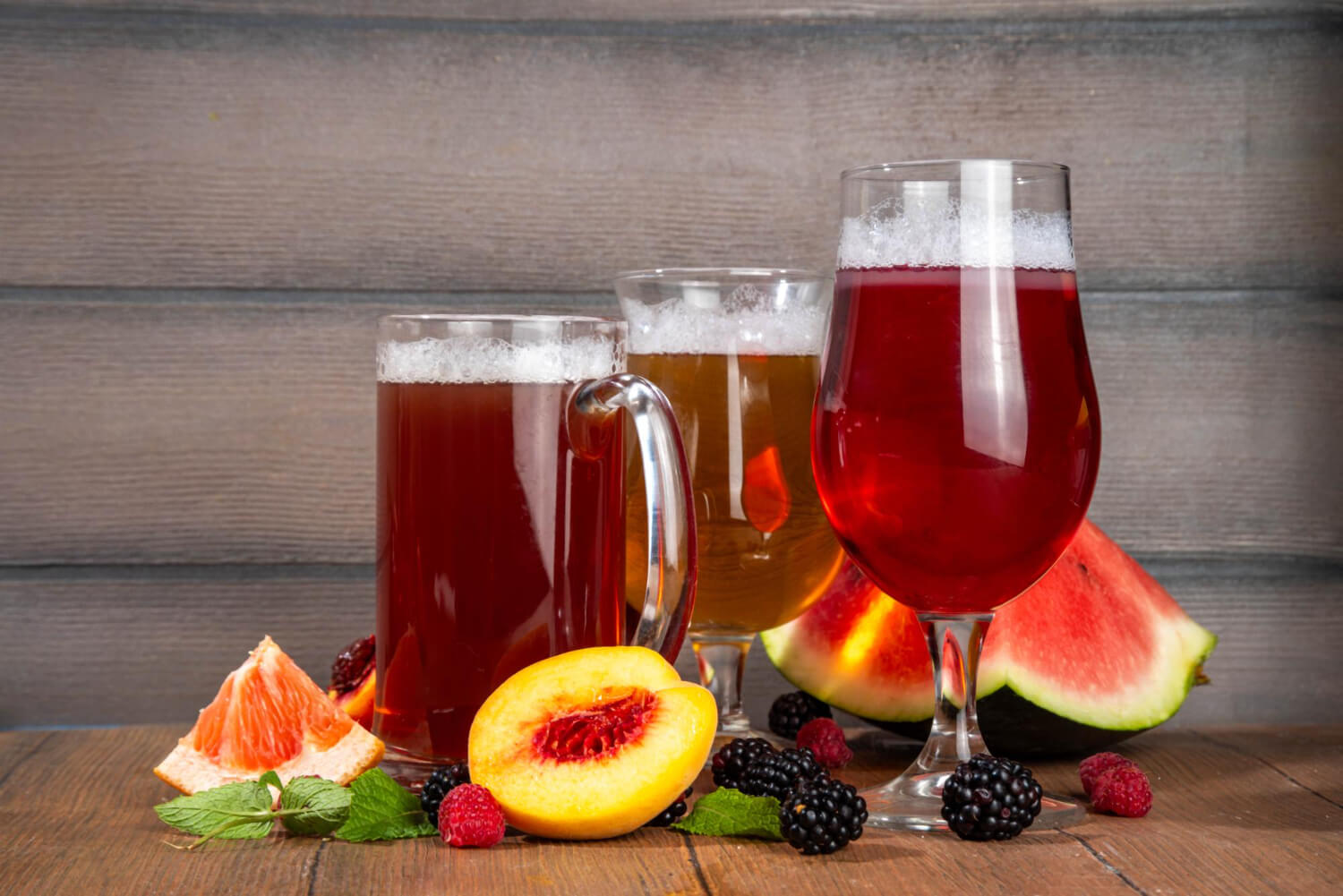
If you’re unsure which fruit juice will work best for your brewery, the key is choosing a reliable supplier of fruit and concentrates designed for brewing. This ensures your beers remain consistent from batch to batch. Which fruits are best for beer? And why are fruit concentrates becoming such a popular choice? You’ll find the answers to these and other questions in our guide.
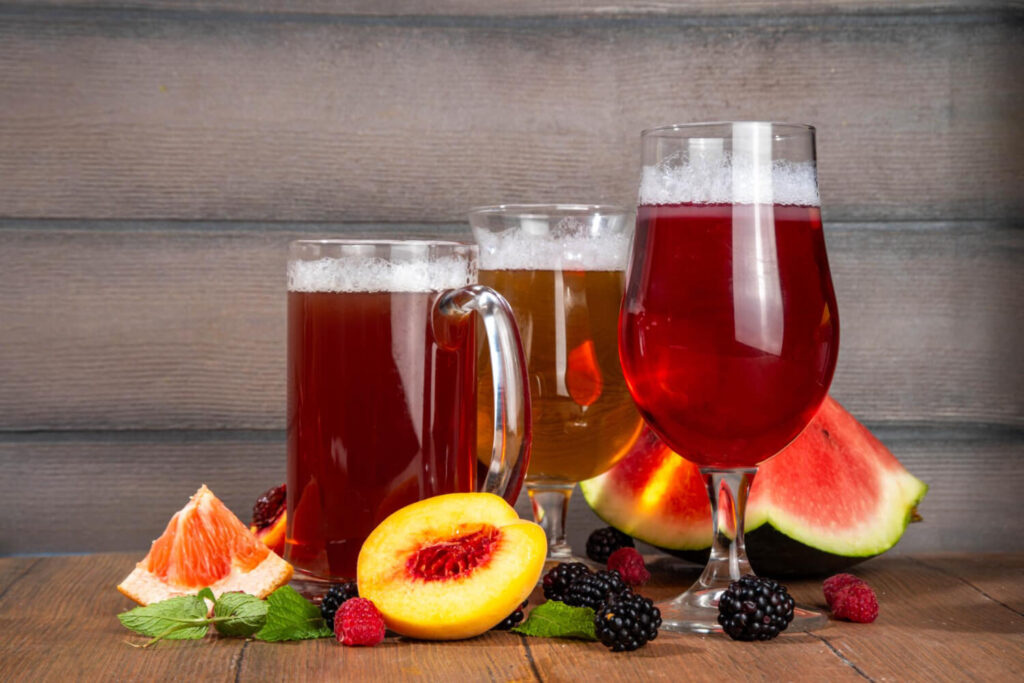
Can You Add Fruit Juice to Beer?
Absolutely – adding fruit juice to beer is a common practice both in craft breweries and large-scale production facilities. This technique not only gives the beer an appealing colour and aroma, but also creates a distinctive flavour profile – from light, refreshing citrus notes to intensely fruity sour ales or fruit ales.
In most cases, breweries use concentrate rather than fresh juice. Concentrated juice offers a stable flavour, a defined extract content and does not create technological challenges during fermentation and subsequent production stages.
In practice, adding fruit juice to beer is not just a flavouring technique – it’s also a way to differentiate your product in a crowded market. The right concentrate can transform the character of a beer, adding freshness, acidity or sweetness depending on the intended style. Increasingly, breweries are experimenting with such additions, which supports the idea that concentrated juices may well represent the future of brewing, enabling flavour profiles that were previously difficult to achieve using traditional methods.
What Are the Most Popular Flavours of Fruit Concentrates for Beer?
In brewing, the best-performing flavours are those that pair well with malt sweetness and hop bitterness. Classic choices include cherry, raspberry and blackcurrant – fruits with intense colour and high acidity that bring depth to the beer. On the other hand, citrus flavours such as lime, grapefruit and orange are gaining popularity, lending freshness and an aroma often associated with summer wheat beers or IPAs.
Craft breweries increasingly experiment with less conventional options: mango, passion fruit and guava enhance the tropical character of modern hop varieties. Some brewers use forest fruits or tart apple varieties to balance the sweetness of dessert-style beers. The decision ultimately depends on the intended outcome – whether the beer should be light and refreshing, or richer, sweeter and full of aroma.
When selecting a raw material, it’s important to remember that fruit concentrates for beer differ not only in flavour, but also in technical characteristics. A high-quality concentrate offers an appropriate Brix level, low sediment content and a consistent sensory profile across batches.
Which Concentrated Fruit Juice Is Best for Each Beer Style?
The choice of juice should always reflect the character of the beer.
- Light lagers and wheat beers pair exceptionally well with citrus fruits such as orange, lemon or lime. They add freshness and a clean, refreshing profile.
- Sour beers (sour, gose, Berliner Weisse) work best with fruits that offer pronounced acidity – blackcurrant, raspberry or cherry.
- IPAs and pale ales benefit from tropical fruits such as mango or passion fruit. These enhance hop-driven notes and intensify the aroma.
- Porters and stouts combine well with forest fruits, blackcurrant or even plum, which add complexity and a touch of acidity to balance the inherent sweetness.
Balance is key – overly sweet juices can overwhelm the beer, while overly acidic ones may distort the intended profile. This is why many brewers intentionally choose standardised products with precisely defined parameters. If you’re wondering what distinguishes regular juice from concentrate, it’s worth exploring what concentrated juice is and why it delivers such strong results in breweries.
Why Use Fruit Concentrates in Beer Production?
Using fruit concentrate offers numerous advantages, primarily ensuring consistency and process safety. Fresh fruit can be unpredictable: sugar levels vary, and it may introduce bacteria or wild yeasts that disrupt fermentation. Concentrates, on the other hand, are pasteurised, stable and easy to dose. They also allow precise control over flavour and colour intensity. . Simply add the required amount to achieve the same result in every batch.
Economic factors also play an important role. Transporting and storing concentrates is significantly easier than handling fresh fruit, which spoils quickly. As a result, the cost of producing fruit beer can be greatly reduced without compromising quality. This explains why more and more breweries, both large and craft, are choosing this solution.
It’s also worth noting that concentrates are not limited to beer. They increasingly appear in recipes for spirits and liqueurs, where they play a similar role – providing an intense, natural aroma. In the spirits industry, this is the foundation for products such as fruit concentrates for flavoured vodka, where both quality and clarity are crucial.
For comparison, those interested in the technological differences may find it useful to look into comparisons of standard juices and concentrated juices. These help illustrate how important standardisation and process control are in modern fruit beer production.
In summary, choosing the right juice or concentrate for beer is a decision that directly affects the success of the final product. It pays to prioritise quality, stability and the expertise of the supplier. With the right choice, every fruit beer can impress not only with its colour and aroma, but also with a consistent, well-balanced flavour.
How to avoid uncontrolled refermentation in fruit beer?
2026-08-24 at 11:58[…] profile and behaviour of the concentrate when mixed with a specific base beer. A guide explaining which juice to choose for fruit beer may also be […]