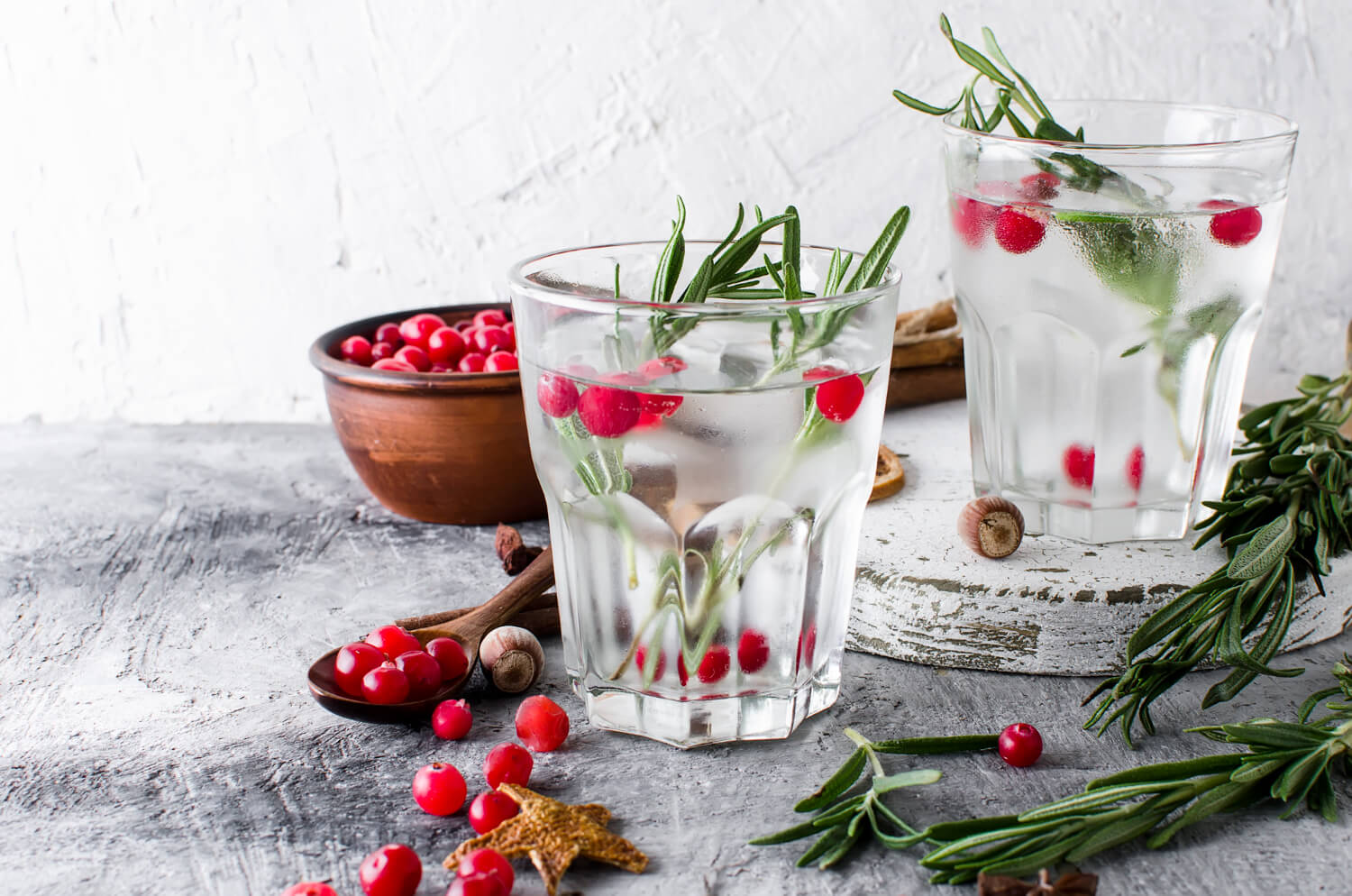
The flavour profile of a fruit vodka should be planned before selecting a specific juice, concentrate or flavouring. The fruit’s name alone does not determine the final result. A raspberry can be fresh and slightly tart, or sweet and dessert-like; a lemon may be associated with the zest or the juice; whilst a mango can be juicy, ripe or almost candy-like.
The final character of the product depends on the quality of the raw materials, the alcohol content, the sugar level, the acidity and the way in which all these elements have been combined.
What are the profiles of fruit vodkas?
People wondering what flavoured vodkas are like usually categorise them according to the fruit used. From a producer’s point of view, however, it is more useful to categorise them according to their sensory characteristics. This allows predicting how the product will be received and which applications it will be best suited to.
Red fruits
This group includes, amongst others, raspberries, strawberries, cherries, sweet cherries, redcurrants, chokeberries, blackberries and blackcurrants. Although they fall into the same category, their flavour profiles can vary considerably.
Strawberries and raspberries usually impart a soft, sweet and easily recognisable aroma. Cherries can give a drink a more dessert-like, stone fruit or slightly dry character. Currants and chokeberries, on the other hand, introduce stronger acidity, tartness and a darker colour.
Red fruits pair well with moderate sweetness, as their natural acidity helps to reduce the sensation of heaviness. However, with a very high sugar content, they can begin to resemble a confectionery filling or syrup.
It is also important to preserve the colour. The anthocyanins present in many red fruits are sensitive to pH, light, temperature and oxidation. The intense colour of a fresh sample does not always mean it will look the same after several months of storage.
Tropical fruits
Mango, passion fruit, pineapple, guava, papaya and lychee create an intense and immediately noticeable profile. Tropical fruits are often perceived as juicy, exotic and modern, but it is easy to cross the line between their natural character and an aroma reminiscent of sweets.
Mango brings softness and a ripe sweetness. Passion fruit provides a distinct acidity and a characteristic stone fruit-tropical aroma. Pineapple combines sweetness with a pronounced freshness, but its profile can be perceived as sharp if not tempered by a suitable base.
Tropical vodkas often work well in cocktails where their intense aroma must remain distinct after the addition of ice, fizzy drinks or other ingredients. With products intended to be consumed neat, it is better to exercise greater caution regarding the levels of aroma and sugar.
Citrus fruits
Lemon, lime, orange and grapefruit are primarily associated with freshness. However, this does not mean that all citrus-flavoured vodkas should be very sour.
In a citrus profile, one can highlight the juiciness of the flesh, the acidity of the juice or the oily character of the zest. Lemon and lime produce a drier, more direct effect. Orange is milder and pairs better with sweetness. Grapefruit can introduce a desirable bitterness, but requires careful balancing so that it does not dominate the entire composition.
Citrus vodkas are generally easy to use in simple drinks. At the same time, their fresh profile quickly reveals any technical flaws. Excessive sweetness, an artificially perceived aroma or excessively high acidity are particularly noticeable in such products.
What should be taken into consideration when choosing the flavour profile of a fruit vodka?
Time of year
Seasonality primarily influences how the product is perceived. In summer, consumers tend to prefer light, tart and refreshing flavours, such as lemon, lime, grapefruit, passion fruit or redcurrant.
In autumn and winter, fuller-bodied flavours may work better: cherry, plum, blackcurrant, orange or combinations of fruit with spices.
This does not mean that a citrus-flavoured product cannot be sold all year round. However, it is worth taking into account the occasion of consumption, the method of serving and the product’s potential inclusion in seasonal cocktail menus.
Intended use of the spirit
Vodka intended to be drunk neat requires a different profile to that used as a base for cocktails. A product tasted on its own should be well-balanced even when consumed neat. The alcohol must not be overly dominant, but nor should it be completely masked by sugar and flavourings.
Cocktail vodka may have a more pronounced profile, as the intensity decreases significantly when ice, tonic, lemonade or juice is added. In such cases, however, it is important to check whether the flavour remains natural even after dilution.
The target audience is also important. A dessert-style product may be based on sweetness and a ripe aroma, whilst an aperitif variant should be lighter, more tart or slightly bitter.
The quality of fruit concentrates for vodka
Fruit concentrate – that is, concentrated juice – affects more than just the aroma. It also contributes natural sugars, organic acids, colour and components that create a sensation of fullness in the mouth.
When selecting fruit concentrates for vodka, it is worth paying attention to their extract, acidity, pH, colour and consistency between batches. Differences in the raw material’s parameters may affect the final dosage and require adjustments to the recipe.
The purity of the flavour profile is also important. The concentrate should not introduce notes of cooked, oxidised or excessively caramelised fruit, unless this effect is specifically intended.
It is also necessary to assess the clarity and stability of the product once combined with alcohol. Natural fruit components may cause sediment, cloudiness or a change in colour. This is not always a flaw, but the effect should be deliberately factored into the product design.
A separate issue is what to choose for vodka production: flavouring or concentrate. Concentrate builds the flavour, acidity and structure, whilst flavouring allows for more precise adjustment of the most volatile notes. In many recipes, both ingredients fulfil different, complementary functions.
Which flavour profile of vodka to choose?
There is no single, universal way to determine which flavour of vodka is best. The best profile is one that suits the intended use of the product and remains consistent throughout its shelf life.
For those who prefer sweeter, more dessert-like flavours, strawberry, ripe cherry, mango, pineapple or orange are suitable choices.
For those who prefer a dry profile, it is worth considering lemon, lime, grapefruit, chokeberry or blackcurrant with a limited amount of sugar.
A well-balanced, versatile product can be based on a combination of a sweeter fruit with a more tart one. Examples include mango with passion fruit, strawberry with lime, cherry with blackcurrant, or orange with grapefruit.
The final decision should be based on trials carried out using the intended alcohol base. The same concentrate may behave differently at varying levels of alcohol, sugar and acidity. It is therefore worth assessing the profile not only immediately after blending, but also after a period of stabilisation and storage.
1 Comment
Comments are closed.
Fruit concentrate or flavouring for flavoured vodka? | Flavouredspirits
2026-08-24 at 16:14[…] With citrus fruits, on the other hand, a distinction must be made between the flavour of the juice and the aroma of the peel. Lemon concentrate contributes acidity and juiciness, whilst a carefully selected aroma can emphasise the fresh, oily note of the zest.Further information on matching fruit to the character of the spirit can be found in the article explaining which fruit vodka profile to choose. […]