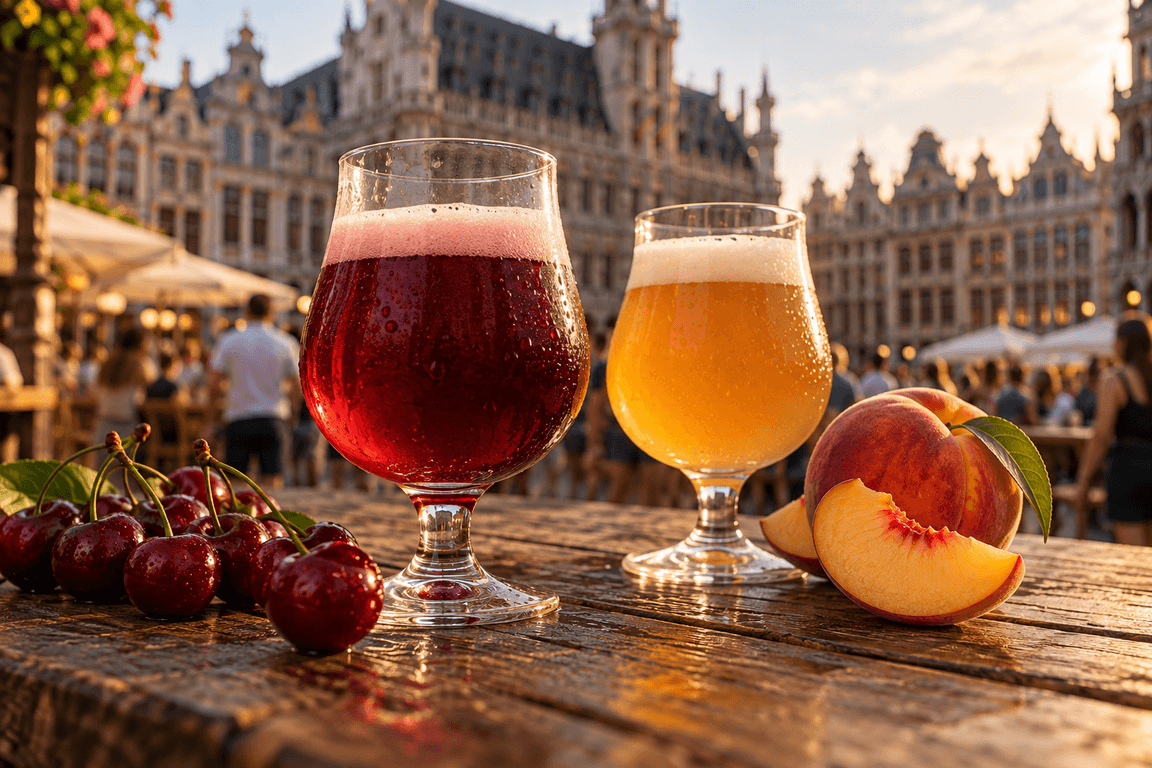
After London and Helsingborg, it was time for Brussels. From 4 to 6 September, the Grand-Place became a meeting place for more than 50 Belgian breweries during Belgian Beer Weekend. Among the exhibitors were both well-established breweries with a long history and producers embracing a more contemporary approach to craft beer.
The trip also included an industry event, the BeComev After Party, held at Brussels Town Hall. This combination offered a broader perspective on the event – from the breweries’ offerings and the way their products are presented to the people behind their development.
What caught my attention most was the role of fruit in Belgian brewing. The participating breweries’ portfolios featured traditional fruit beers, extensive product ranges and alcohol-free variants. Yet behind the same fruit name lie very different approaches to flavour and production methods.
Firstly: traditional fruit beers have a distinct identity
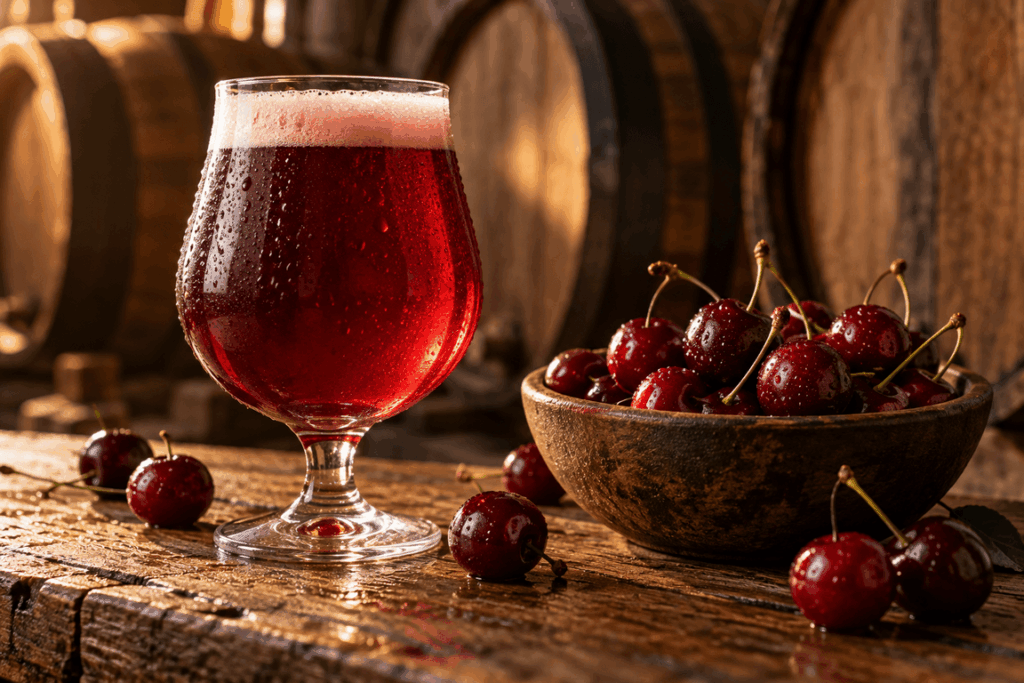
Among the breweries taking part in Belgian Beer Weekend was Boon, whose Kriek is a good example of how important the raw ingredient is to a beer’s character. The brewery states that it uses 250 grams of cherries per litre of beer and ferments them with young lambic.
It is a clear example of how closely the fruit, the brewing process and the brand’s history can be connected. The way the cherries are used here is part of the answer to a fundamental question: what exactly is this beer?
From a raw-material perspective, a product like this requires an understanding of the brewery’s approach. What matters is the form in which the fruit is used, its role in the fermentation process and the character the producer aims to preserve.
When looking at Belgian beers, it is therefore worth going beyond descriptions such as “cherry” or “raspberry”. The flavour name alone tells us little about how the product is made or what to expect from the finished beer.
Secondly: fruit can form entire product ranges
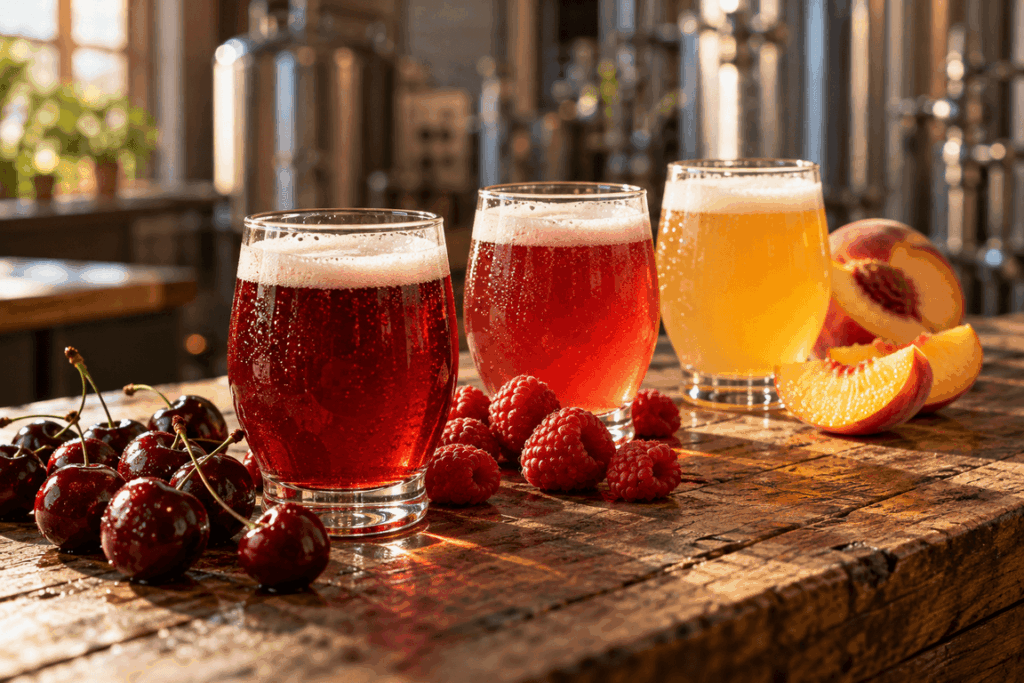
Alongside the traditional approach, there is a clear trend towards developing product ranges around several recognisable fruit profiles. A good example is Kasteel’s portfolio, which includes Rouge, Rubus Framboise and Tropical, as well as their 0.0 counterparts.
What stands out here is the consistency of the brand-building approach. Each product has its own flavour profile while remaining part of the same family.
For someone working with raw materials, this translates into several distinct tasks. For each variant, it is essential to define the role of the fruit, its relationship with the base, and the desired level of intensity. The next step is to ensure that this profile can be consistently reproduced.
Cherry, raspberry and tropical fruit blends should not be treated as interchangeable additions used in the same proportions. Each recipe requires an individual assessment of aroma, acidity, sweetness and the overall finish.
Looking at a portfolio like this also highlights how the development of fruit beers can be approached by gradually expanding a clearly defined concept. Each new variant should have a clear place within the range and a specific reason for consumers to choose it.
Thirdly: fruit-forward 0.0% beers are already a defined proposition
In Belgian brewing, alcohol-free fruit beers already have established names and a clear place within the portfolio. Alongside Kasteel products, examples include Lindemans Kriek 0.0% and Pecheresse 0.0%, which the brewery presents as alcohol-free fruit beers.
This represents an interesting direction for ingredient suppliers. A familiar fruit gives consumers an immediately recognisable point of reference. Cherry or peach allows consumers to understand the product concept even before opening the bottle.
What matters most, however, is what happens next, during consumption. The aroma should complement the flavour, while sweetness and acidity should form a coherent whole with the base beer.
From a technological perspective, an alcohol-free version requires its own dedicated recipe development. It is worth testing different dosages and proportions, assessing the finished product under the intended serving conditions.
For me, the presence of such products in the portfolios of established Belgian breweries is, above all, a tangible example of how fruit applications can be developed. The same flavour direction can work across several products, each of which requires its own formulation and refinement.
Fourthly: the beer industry is also shaped by its wider professional community
The Brussels weekend also included events centred around the people working in and contributing to the beer industry. The BeComev After Party programme featured the announcement of the “Beer Personality of the Year 2026”, an accolade presented by Bière Grand Cru and Belgomalt.
This added a valuable dimension to the festival’s brewery showcase. Alongside finished products, there was also space to recognise the people and initiatives contributing to the development of the industry.
When it comes to ingredient partnerships, understanding the wider context is particularly important. A brewery developing a new product range needs a different proposition from a producer whose priority is to preserve the character of an existing beer.
That is why conversations about fruit should start with the product itself: its style, production method and the desired outcome. Only then does it make sense to move on to specifications, samples, packaging or delivery schedules.
What stayed with me after Brussels?
Above all, it was the diversity of approaches that can exist within a single category of fruit beers. A traditional kriek, a recognisable raspberry brand and a fruit-forward 0.0% beer may draw on similar flavour associations, but each represents a different product concept.
Belgian Beer Weekend provided an opportunity to explore this diversity in the context of the breweries and brands behind these products. BeComev added an industry perspective to the trip, providing a broader professional context.
From the perspective of my work, the most interesting aspect is how a beer concept translates into specific requirements for the fruit ingredient. That is where the selection of the right raw material begins: with an understanding of the flavour the brewery wants to achieve and the process through which it intends to build that flavour.