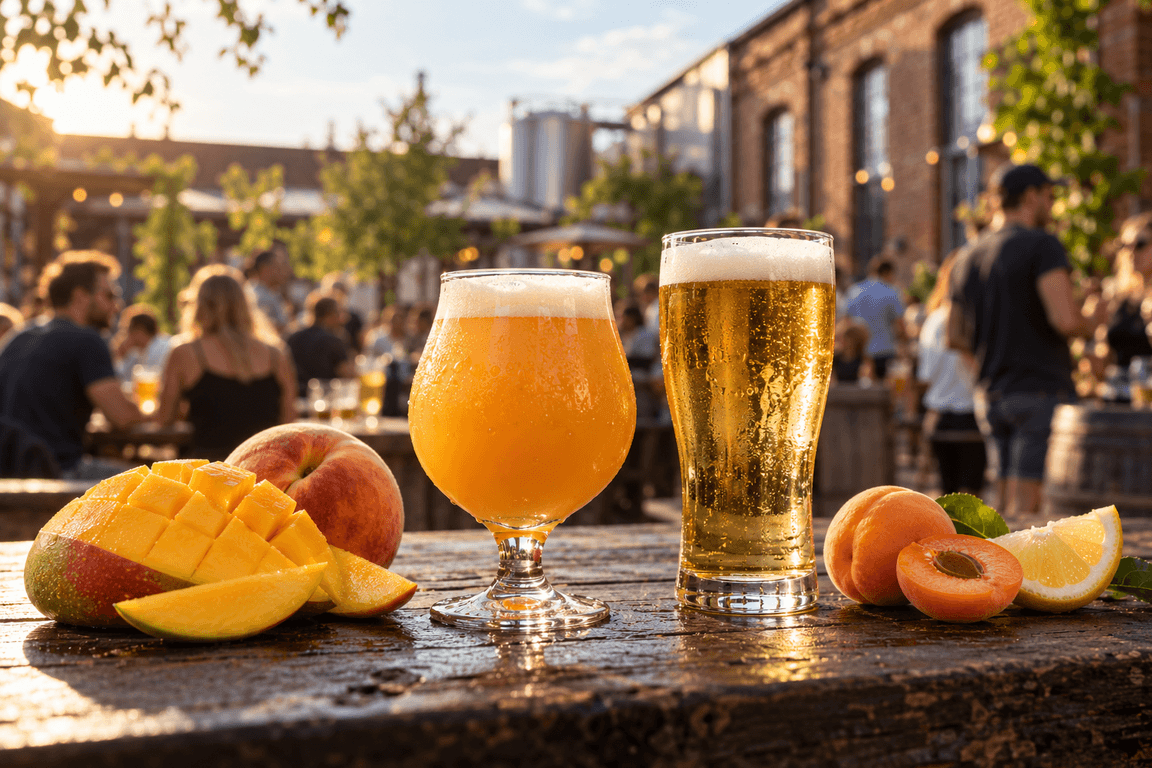
A trip to Brewskival in Helsingborg was an opportunity to look at craft beer from a broader perspective. The festival, organised by Brewski, took place from 28 to 30 August and brought together producers from many parts of the world. Among the invited breweries were Omnipollo, Dugges, Elmeleven, Goose Island, Japan’s Minoh Brewery and Poland’s Funky Fluid. Bringing such a diverse group of breweries together in one place makes it possible to compare very different approaches to brewing and flavour development.
From the perspective of someone working with ingredients for breweries, I am particularly interested in the role that fruit plays in these products. Is it primarily responsible for the aroma? Does it contribute acidity? Does it add texture? Or does it become the defining ingredient that shapes the entire drinking experience?
Brewskival provides a useful starting point for exploring these questions. My conclusions are primarily about flavour design and the factors that need to be considered to turn an interesting concept into a well-refined product.
Firstly: fruit can shape the entire drinking experience
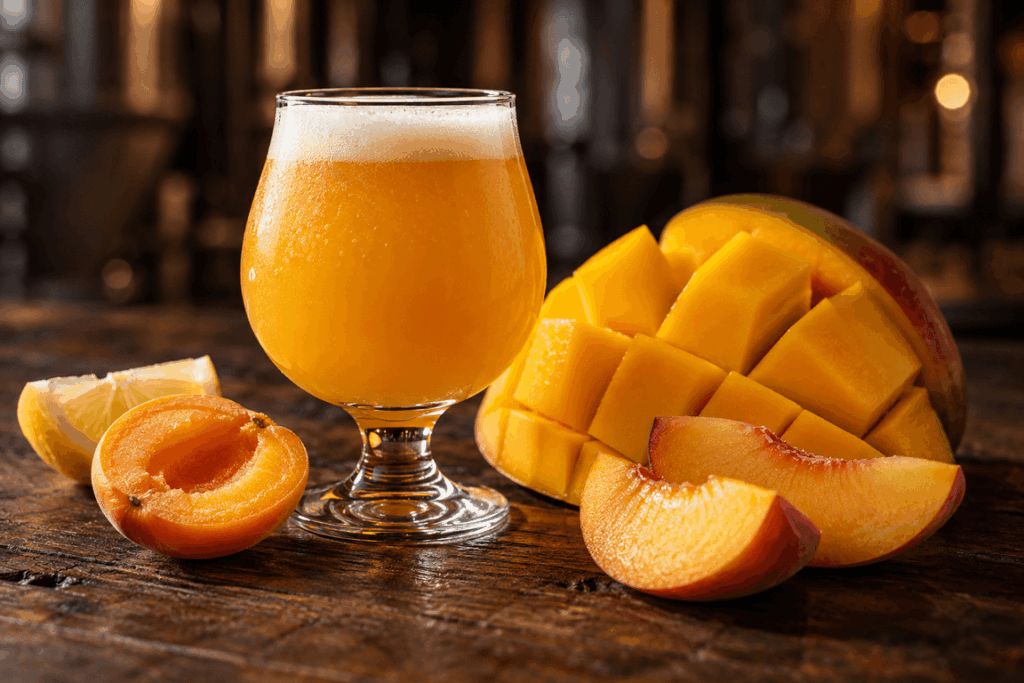
Elmeleven’s festival offering included Airwave, described as a PULP Sour with mango, peach, apricot and lemon. Funky Fluid announced beers from its Gelato XTREME series, while Duckpond featured, among other styles, fruit-forward gose and pastry sours. These are examples of recipes in which fruit forms a significant part of the overall product concept.
For a technologist, this means considering several elements simultaneously. An intense aroma alone is not enough if the texture, sweetness and acidity do not match the promise conveyed by the beer’s name.
A product inspired by sorbet should create a different drinking experience from a beer inspired by cheesecake or a light citrus drink. Even when using the same or a similar fruit, a different base and an entirely different approach to building balance may be required.
That is why, before selecting the ingredient, it is worth answering a simple question: what exactly should the person drinking the finished beer experience? Only then should you move on to selecting the form of the fruit and determining the appropriate dosage.
Secondly: multiple fruits in a recipe need a clear hierarchy
Combining three or four fruits creates plenty of possibilities, but a long list of ingredients does not, in itself, guarantee a complex flavour.
In a well-designed blend, each fruit should have a clearly defined role. One may establish the main flavour profile, another complement it, while a third contributes acidity and freshness. If every fruit is intended to dominate, the result can easily be an intense product that is difficult to define.
From a recipe-development perspective, what matters more than the number of additions is whether their role in the finished beer is clear and easy to understand. Does the peach remain perceptible? Does the citrus fruit add freshness to the blend? Does the next ingredient genuinely improve the overall result?
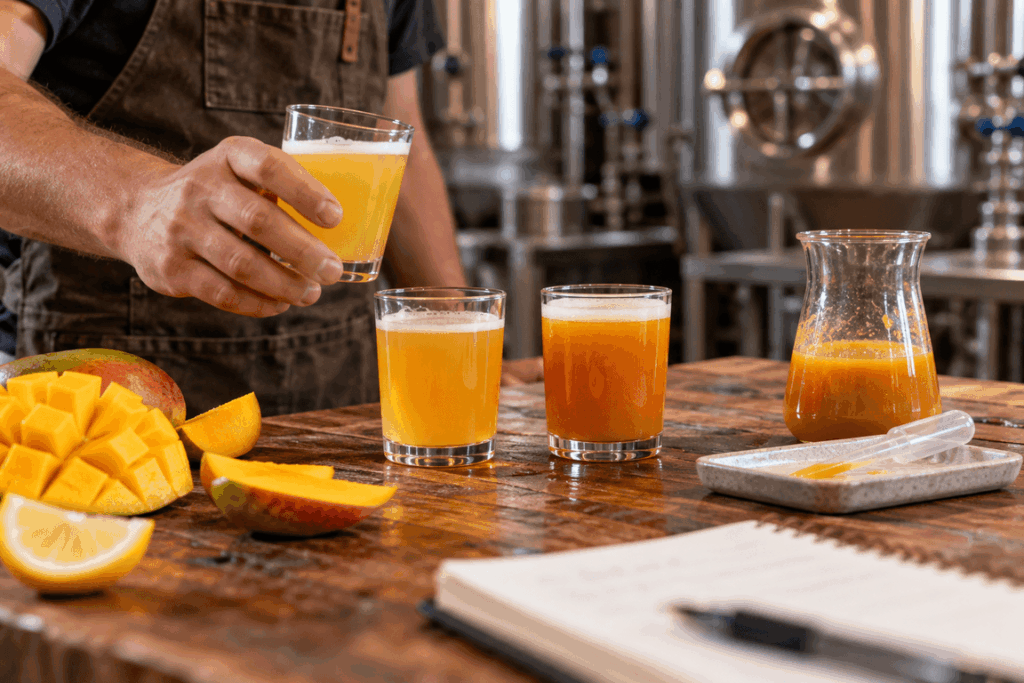
This is precisely why comparative trials are valuable. It is worth comparing the base with one fruit, then adding a second and assessing what has actually changed. Sometimes a small adjustment to the proportions can achieve more than introducing another ingredient.
A good recipe should have a clear direction. Consumers do not need to identify every ingredient individually, but they should experience a coherent flavour.
Thirdly: alongside intense beers, there is still room for simplicity
The Brewskival line-up also included classic beer styles. Newbarns announced, among other beers, a pilsner, helles and a 3% ABV Table Beer, while Nynäshamns Ångbryggeri featured a lager, bitter and wheat beer. Alongside elaborate fruit-forward compositions and strong barrel-aged beers, there were therefore products with a completely different character.
For me, this is a reminder not to reduce the development of craft brewing to a pursuit of ever-greater intensity. A festival can accommodate both a beer intended for slow appreciation in a small serving and one whose primary purpose is simply to be enjoyable to drink.
The same perspective is worth keeping in mind when working with fruit. Not every recipe requires a high dosage, a dense texture or a dessert-like character. Sometimes the aim is simply to complement the base subtly, enhance freshness or add a distinctive flavour accent.
Drinkability should always be assessed in the context of the specific product. A light beer designed for a warm day calls for a different approach from an intense, dessert-inspired sour. Both can be well-refined products, provided that the individual elements remain in balance.
Fourthly: the recipe also needs to work in production
From the perspective of an ingredient supplier, the most interesting stage comes when an idea has to be translated into the conditions of a specific brewery.
The choice between juice, concentrate and purée should be driven by the desired outcome as well as the capabilities of the production process. Factors such as consistency, the amount of water introduced, dosing and mixing methods, and product losses all matter.
Then there is consistency and repeatability. The brewery needs to know whether the next batch of an ingredient will deliver the same flavour profile and whether any variations will require adjustments to the recipe. This becomes particularly important when fruit accounts for a significant part of the beer’s character.
That is why conversations about ingredients are best started with the finished product: its style, desired texture, sweetness and production process. Simply saying “we’re looking for mango” reveals very little about what the brewery actually needs.
The more clearly the objective is defined, the easier it becomes to prepare a meaningful trial and assess the result.
What have I taken away from my trip to Helsingborg?
For me, Brewskival is a starting point for thinking about the diversity of ways in which ingredients can be used. The same fruit can play a role in creating completely different products, depending on the base, proportions and intended outcome.
I would not, however, treat the festival line-up as a representation of the market as a whole. It is primarily a place to showcase ideas, compare different approaches and find inspiration for further development.
The key takeaway? It is worth starting with a clearly defined experience that we want to create. Only then should we select the ingredients and technology needed to achieve it.
In the case of fruit beers, this means combining creativity with precision. The right ingredient should help deliver a specific flavour, work in harmony with the base and make it possible to reproduce the intended result in the next batch. It is at this stage that festival inspiration begins to translate into a real product.